学术文章

Number: 89/90
Author: Prof. Dr. Abdul Malik Salaatnia
This topic falls within the activities of the International Symposium on Desert Culture, which explores the cultural and heritage history of the Arabian Desert. At first glance, one can see that this field of study is vast and encompasses various aspects of human life that have shaped civilizations over history, influenced by climatic and economic conditions, and defined by societal norms shaped by the necessities of survival. Through our examination, we have constructed a model of life whose impacts are still felt today. Covering more than two million square kilometers, or 4/5 of the total area, the Algerian Sahara has been significantly shaped by human activity for mil

Number: 87/88
Author: Dr Abdullah H. Masry and Dr Martina Renzi
This study focuses on the analysis of the southwestern region of the Arabian Peninsula, which has been less thoroughly investigated compared to other areas of Arabia. Present-day Southwest Arabia is politically divided between parts of Saudi Arabia (the regions of Asir and Najran), Yemen, and a small portion of Oman (Dhofar). The Rub’ al Khali desert, also known as the Empty Quarter, serves as a geographical and cultural barrier between the northern and southern regions.

Number: 85/86
Author: Qasim ibn Khalaf Al-Ruways
From a national cultural perspective, this paper seeks to introduce one of the prominent anthropologists, a serious academic who made society his field and the desert his destination to rain down on the popular memory before the demise of the pre-oil generations. He gathered scattered fragments that were on the verge of disappearing and studied them using modern scientific methods, probing their depths with a sensitivity that made him a global reference in this regard. It is an extended reading over the timeline of Saad Al-Sowayan’s life, starting with his personal and intellectual background, then moving on to the challenges and achie

Number: 83/84
Author: Dr. Heba Albeity
This research asserts that, for Al-Thubaytī, the desert transcended its mere geographical existence. It ebbed and flowed through his verses as a sentient being, perpetually in motion, seeking its essence within the poet’s words and anticipating the reverberations of his verse. While the desert resided within the very fabric of his writings, it also trailed behind him, the grains of its sands refining his every stride: “I arrived hastily, with the desert trailing me; the script of the sand weaving through my footfalls.” The poet’s creation of this imaginary desert serves as implicit evidence of the profound existential alien

Number: 81/82
Author: Dr. Awad Al-Qurashi and Dr. Abdullah Al-Zubaidi
One of the striking aspects of the Arabian desert culture is the fascination with and captivation by encryption and coding in human communication, both verbal and non-verbal. In certain contexts, people use indirect symbols to convey requests, reprimands, challenges, tests, or other forms of social interaction. For example, in Arabian tradition, a guest’s refusal to drink the first cup of coffee offered is understood as an implicit sign of a request or as a subtle expression of reproach. In contrast, serving a cup beyond its customary limit is often perceived as an implicit sign of disrespect or a diminished sense of esteem. Likewise, certain

Number: 79/80
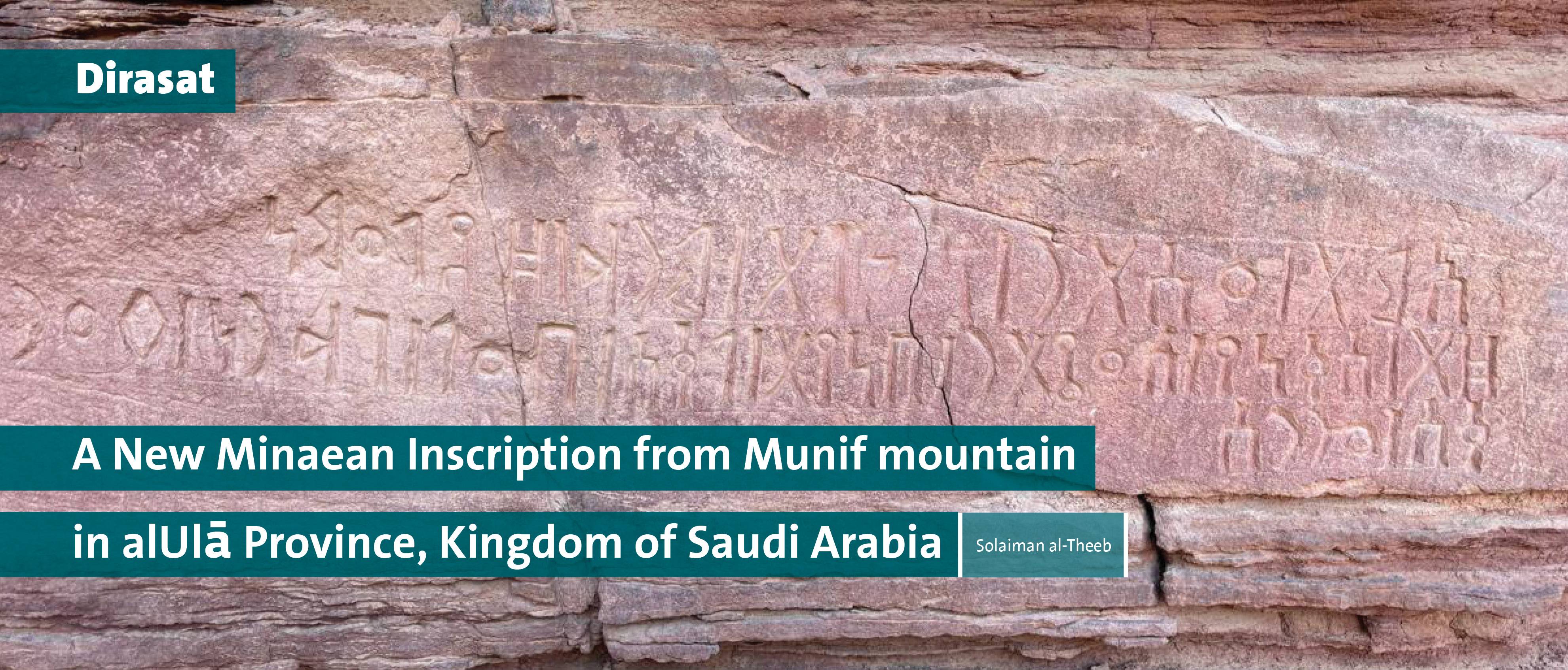
Author: Solaiman al-Theeb
This inscription, discovered by Mr. Ahmed son of Mohammed al-Masuod during his visit to Abdulrahim al-Suqayr’s farm, is carved in relief on one of the rock faces of a mountain locally known as “Zib Munif,” located in the north of the Old Town of AlCulā which is about 4 kilometers. The writing technique reflects the skill and linguistic proficiency of the author in South Arabian script and language. If we consider the use of the letter “s” at the beginning of the verb (sqny) and at the end of names (Crrs) as a third-person singular pronoun, it shows a proof that indicates the Minaean dialect.
Number: 77
Author: مايكل كريستوفر لو
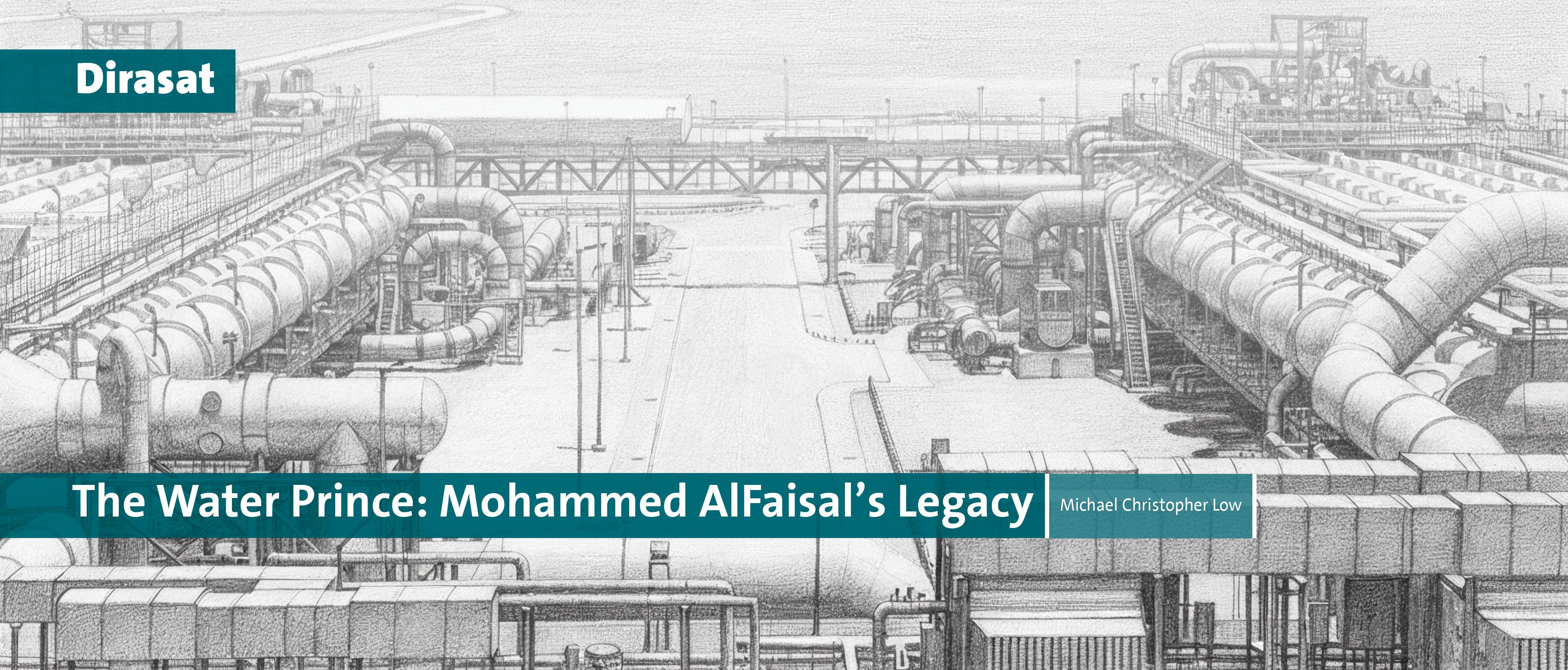
20世纪的沙特历史几乎与石油划上等号。虽然人们通常把石油和天然气管道视为这个快速成长国家基础设施的生命线,但还有另一套管道与处理站却长期被历史学者忽视,那就是海水淡化设施。虽然它名气不大,但沙特事实上已经成为全球海水淡化领域的领先国家,它不仅是一个依赖石油的国家,同时也是一个依赖海水淡化的国家。本文认为,我们同样需要把沙特视为海水淡化领域的超级力量ï¼

Number:
Author: المحرر: د. محمد السبيطلي
《非洲追踪》期刊新一期收录多篇探讨历史上红海两岸各民族,以及萨赫勒和撒哈拉地区各民族在习俗、传统和语言等方面的共同文化因素,这些因素的形成源于迁徙、贸易和朝觐之旅。本期还刊载了一系列涉及非洲局势的政治与经济报告。